
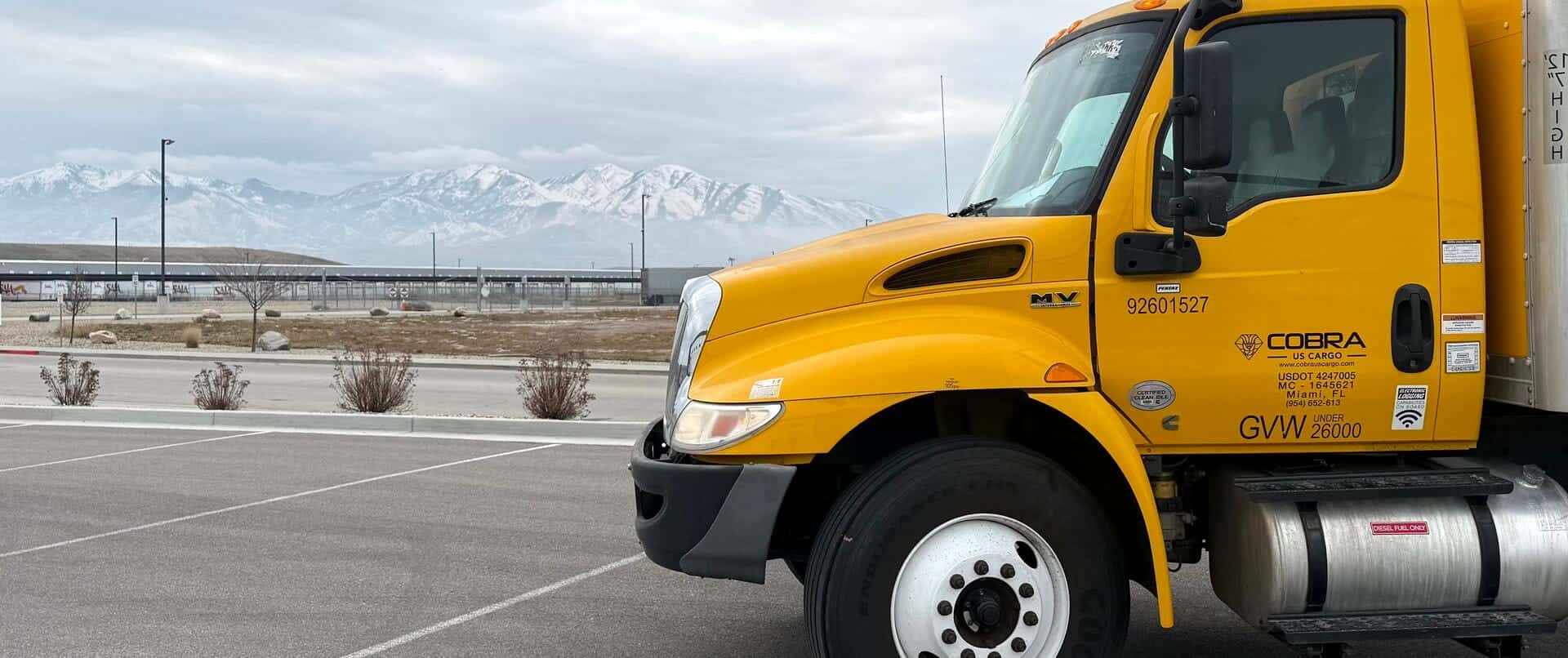
Here is how to verify a trucking company before you tender a load: look up its USDOT or MC number on FMCSA's free SAFER Company Snapshot, confirm it shows Active and Authorized for property, and match the legal name, address and phone to the person quoting you. Then get the certificate of insurance from the carrier's agent and check the cargo limit.
This guide is for shippers, receivers and freight brokers who vet carriers before they book. It also helps anyone who wants to confirm that the box truck backing into their dock belongs to the company they hired.
Key takeaways
- SAFER shows whether a carrier is registered and authorized. It does not prove the person emailing you works there.
- MC numbers are still issued in 2026. FMCSA's new Motus system kept the MC, MX and FF prefixes, and ending them would take a separate rulemaking.
- New USDOT and MC numbers are now randomized, so a number no longer tells you how old a carrier is.
- FMCSA filings show liability insurance only. General freight carriers don't have to file cargo insurance, so get the COI.
- Always call the phone number on the FMCSA record, not the one in the email signature.
How to verify a trucking company before you book
Vetting a carrier means checking four separate things. No single lookup covers all of them:
- Registration and authority. Is the company registered with FMCSA, and does it hold active for-hire authority for your type of freight?
- Identity. Is the person quoting your load really from that company?
- Insurance. Is liability coverage on file, and does the cargo policy cover your load's value?
- Safety history. Do the inspection and crash records raise flags?
The first and fourth checks are public and take a couple of minutes. The second and third take a phone call and a document request. That is where most freight fraud gets through, because a clean SAFER record is easy to borrow. Knowing how to verify a trucking company means checking the person on the phone, not just the number on the record.
How to read a SAFER company snapshot (worked example)
The SAFER Company Snapshot is FMCSA's public summary of a registered company. You can search it by USDOT number, MC number or name, with no account or fee. To show what each field means, here is our own record: the SAFER snapshot for Cobra US Cargo LLC (opens in a new tab), with data current as of September 29, 2026.
| Snapshot field | Cobra US Cargo record | What to check on any carrier |
|---|---|---|
| Entity Type | Carrier | "Broker" alone means it cannot haul the load itself |
| USDOT Status | Active | Inactive or Out of Service means stop |
| Out of Service Date | None | Any date means FMCSA ordered the carrier off the road |
| Legal Name | COBRA US CARGO LLC | Must match the contract, invoice and truck door |
| Physical Address | 7025 NW 7th Ave, Miami, FL 33150 | A real business location, not a mailbox store |
| Phone | (754) 288-7569 | Call this number to confirm the load |
| USDOT Number | 4247005 | Must match the truck marking |
| MC/MX/FF Number | MC-1645621 | Must match the rate confirmation |
| Power Units | 1 | Should be plausible for the volume being promised |
| MCS-150 Form Date | 04/29/2026 | Older than 24 months is a warning sign |
| Operation Classification | Authorized for hire | Private-only carriers cannot haul your freight for pay |
| Carrier Operation | Interstate | Needed for any shipment that crosses state lines |
| Cargo Carried | General freight | Should cover what you are shipping |
| Operating Authority Status | Authorized for: Motor Carrier of Property (Except Household Goods) | The single most important line |
| Safety Rating | None | Unrated is common and neutral |
What "except household goods" means for you. This is the standard authority for commercial freight: pallets, cartons, crates, equipment and retail deliveries. It does not cover residential moves of personal belongings, which need separate household goods authority. For a business shipment, this is the authority you want to see. For a family's furniture, hire a licensed household goods mover.
Below those fields, the snapshot lists US roadside inspections and crashes for the last 24 months, with out-of-service rates next to the national averages. One inspection with a violation is normal. A vehicle out-of-service rate well above the national average across many inspections deserves a question.
For more detail, search the same USDOT number in FMCSA's Safety Measurement System (SMS) (opens in a new tab). For property carriers, the public view shows inspection and crash data, investigation results and measures for most BASICs, the safety categories behind CSA. The Crash Indicator and Hazardous Materials BASICs stay hidden from the public under the FAST Act.
What is the difference between a USDOT number and an MC number?
The USDOT number identifies the company for safety oversight. Companies that run commercial vehicles in interstate commerce need one, and it must be marked on the truck. The MC number is a docket number for operating authority, the federal permission to haul regulated freight for hire across state lines.
| USDOT number | MC number | |
|---|---|---|
| What it is | Company safety identifier | Operating authority docket |
| Who needs it | Interstate commercial vehicle operators, for-hire or private | For-hire carriers, brokers and freight forwarders of regulated freight |
| Proves | The company is registered and tracked for safety | The company may legally haul or arrange freight for pay |
| Where it appears | Truck door, SAFER, inspection reports | Rate confirmations, broker setup packets, SAFER |
For a shipper, the takeaway is simple. A company with a USDOT number but no active authority can move its own goods. It cannot haul your regulated freight for pay across state lines.
Are MC numbers going away?
Not as of October 2026. Many 2025 articles claimed MC numbers were eliminated on October 1, 2025. FMCSA's own page on registration changes in Motus (opens in a new tab) says otherwise. Existing USDOT and docket numbers do not change, Motus continues to issue docket numbers, and the MC, MX and FF prefixes stay the same. Ending docket numbers is still under consideration and would first go out for public comment in a Notice of Proposed Rulemaking.
What did change: Motus replaced FMCSA's legacy registration tools in May 2026. It randomizes newly issued USDOT and docket numbers to fight fraud, and it gives each newly granted authority its own docket number. Brokers used to judge a carrier's age by its MC number, since higher numbers meant newer authority. That shortcut no longer works for new registrations. Check the authority's grant date instead, and keep asking for both numbers.
How to verify a carrier's insurance (and what FMCSA doesn't show)
FMCSA requires every for-hire property carrier to keep proof of liability insurance on file, and the carrier's insurance company makes that filing. FMCSA's insurance filing requirements chart (opens in a new tab) sets the minimum for a for-hire carrier of non-hazardous freight running vehicles of 10,001 lb GVWR or more at $750,000 in bodily injury and property damage (BIPD) coverage. The cargo insurance requirement for that same carrier is $0.
Household goods carriers are the exception: the same chart requires them to file at least $5,000 in cargo coverage. General freight carriers buy cargo insurance because brokers and shippers demand it, not because FMCSA does. So no public database will tell you a general freight carrier's cargo limit.
To check insurance properly:
- Check the filing. SAFER's "Licensing and Insurance" link now hands off to Motus, which is taking over authority and insurance records. Confirm a liability filing is on record. If the required filing lapses, FMCSA starts revocation proceedings.
- Get the COI from the agent. Ask the carrier for its insurance agent's name, look up the agency's phone number yourself, and request the certificate of insurance directly. FMCSA warns that even insurance certificates can be fraudulent.
- Read the cargo section. Compare the cargo limit with the value of your load. If the load is worth more than the limit, the gap is your risk.
- Look for limits on what is covered. Ask whether the truck is a scheduled unit on the policy and whether any commodity exclusions apply. Some cargo policies exclude goods such as electronics or alcohol.
- Get named. Ask to be listed as certificate holder. It puts you in line for notice if the policy is cancelled, though the policy terms decide whether that notice is sent.
Red flags of carrier identity theft and double brokering
Carrier identity theft is when someone uses another carrier's USDOT and MC numbers to win loads. Double brokering is when a carrier takes your load and hands it to a different carrier without your knowledge. It often runs under a stolen identity, and the freight or the payment disappears. FMCSA's page on broker and carrier fraud and identity theft (opens in a new tab) lists the warning signs. At the dock and on the phone, they look like this:
- The phone does not match. The number in the email signature differs from the one on SAFER. Call the SAFER number and ask for the person by name.
- There is no phone on SAFER at all. FMCSA suggests not contracting until you can confirm the transaction.
- The email domain is off. A free webmail address, or a domain one letter away from the carrier's real website.
- Search results lead you astray. FMCSA warns that the top search results for a company's phone or website can be fake profiles set up by scammers. Start from the SAFER record, not a search engine.
- The rate or the terms are too good. A carrier quick to accept far below market, or a broker quick to pay far above it.
- The paperwork changes mid-load. A new remit-to address, a new factoring company, or a request to pay a different name.
- The truck does not match. The name and USDOT on the door at pickup differ from the carrier you booked, or the driver says he works for someone else.
- It's a "blind" load. The destination is hidden, or the driver is told to present as a different company.
One legitimate exception: an owner-operator leased on to a carrier runs under that carrier's authority. The truck should show the carrier's name and USDOT, not the owner's own. If the marking matches the company on your rate confirmation, that is correct.
If something looks wrong, stop the transaction. Call the FMCSA Contact Center at 1-800-832-5660 and file a complaint in FMCSA's National Consumer Complaint Database (opens in a new tab). You can also report it to the USDOT Inspector General hotline at (800) 424-9071 and the FBI's Internet Crime Complaint Center. Tell your insurer, and your factoring company if you use one. Photos of the truck, trailer and plates at pickup help law enforcement later.
A 10-minute carrier vetting checklist
This is how to verify a trucking company in about 10 minutes. Run it on every new carrier, and again on any carrier whose contact details recently changed.
| Step | Where | Pass if |
|---|---|---|
| 1. Look up USDOT and MC | SAFER Company Snapshot | Both numbers return the same company |
| 2. Check status | Snapshot | Active, no out-of-service date, Authorized for property |
| 3. Match identity | Snapshot vs. rate confirmation | Legal name, address and MC match exactly |
| 4. Call the listed phone | Number on SAFER | The person and the load are confirmed |
| 5. Check MCS-150 date | Snapshot | Updated within the last 24 months |
| 6. Review safety | Snapshot and SMS | No pattern of out-of-service orders |
| 7. Check authority history | Licensing and Insurance record | Grant date fits the story; no recent revocation |
| 8. Confirm liability filing | Licensing and Insurance record | Active BIPD filing on record |
| 9. Get the COI from the agent | Agent's own phone line | Cargo limit covers the load value |
| 10. Verify at pickup | Dock | Truck door name and USDOT match the carrier booked |
Write down what you checked, the date and the name of the person you spoke with. If a claim comes up later, that record matters as much as the check itself. Once the load is confirmed, make sure the rate confirmation spells out any accessorial charges so there are no surprises at delivery.
How Cobra US Cargo handles vetting requests
We would rather be checked than trusted. Our company details match our FMCSA record: USDOT 4247005, MC-1645621, interstate common carrier of property (except household goods) since December 2024. We send our carrier packet, with the MC authority letter, certificate of insurance and W-9, on request. Our coverage is $1,000,000 auto liability and $100,000 cargo, and you can confirm it directly with our insurance agent. When you request a freight quote for a Miami to New York freight run or a one-off load, call the number on our SAFER record first. If anything on our paperwork doesn't match FMCSA's record, don't book us until it does.
Sources
- FMCSA SAFER — Company Snapshot, Cobra US Cargo LLC (USDOT 4247005) (opens in a new tab)
- FMCSA — About FMCSA Registration Changes (Motus) (opens in a new tab)
- FMCSA — Registration Modernization FAQs (opens in a new tab)
- FMCSA — Insurance Filing Requirements (opens in a new tab)
- FMCSA — Safety Measurement System (SMS) (opens in a new tab)
- FMCSA — Broker and Carrier Fraud and Identity Theft (opens in a new tab)