
The cost to ship freight from Miami to New York depends on five things: how much truck space you use, about 1,280 road miles of fuel and driver time, how many legal driving days the trip takes, the tolls into New York, and what happens at each dock. A price quoted without your pallets, addresses and dates is a guess. Below is how a carrier actually builds the number.
This guide is for shippers, receivers and brokers pricing the lane. It covers the transit math, the public fuel and toll data behind the rate, and what to send so the quote holds up.
Key takeaways
- About 1,280 road miles on I-95 means a solo driver typically needs 2–3 days door to door. Under federal hours-of-service rules, it's not a one-day run.
- Diesel is one of the biggest moving parts. The EIA publishes regional prices every week, and for the week of September 28, 2026, the U.S. average was $6.382 per gallon.
- Tolls on the corridor are charged by axle and, at several facilities, in one direction only. Northbound into New York is the expensive direction, and Port Authority E-ZPass discounts go only to NY/NJ E-ZPass accounts.
- Equipment choice matters. A box truck, LTL and a 53 ft trailer price on different logic.
- Accurate details up front (pallets, dims, weight, dock or liftgate, appointment windows) are what turn a range into a real quote.
How much does it cost to ship freight from Miami to New York?
There is no fixed price, and you should be skeptical of pages that print one. The Miami to New York freight rates printed on most lane pages come from averages or lead forms, not from a carrier who has looked at your freight. They also disagree on the basics. Published distances run from about 1,090 miles (straight-line, not road miles) to 1,420 miles.
The real cost to ship freight from Miami to New York is built from cost blocks you can check:
| Cost block | What sets it | What you control |
|---|---|---|
| Linehaul | Road miles, driver days, equipment | Ship date flexibility, equipment choice |
| Fuel | Gallons burned × current diesel price | Little, but you can read the EIA data |
| Tolls | Axle class, direction, time of day | Delivery time (off-peak or overnight) |
| Accessorials | Liftgate, inside delivery, detention, appointments | Accurate dock info, ready freight |
| Return leg | Whether the truck can reload near your delivery | Nothing directly; it shows up in the rate |
When two quotes differ, compare them block by block. Usually one carrier has priced an accessorial the other left out, or assumed different equipment.
What drives the price on the Miami to New York lane?
Miles come first. From Miami to New York City is about 1,280 road miles via I-95. A pickup in Doral and a delivery in Brooklyn is a different trip from Fort Lauderdale to the Bronx, so give full addresses, not just city names.
Space comes second. A full 26 ft box truck, six pallets in a shared truck, and one pallet in an LTL network are three different products. If you're between 4 and 12 pallets, read our comparison of partial truckload vs LTL before you request quotes.
Then come delivery conditions. A New York receiver with a dock and appointments is a simple stop. A ground-floor store in Manhattan with no dock and a narrow receiving window needs a liftgate, extra time and often an off-hours plan. Those costs belong in the quote, not on a surprise invoice. Our guide to freight accessorial charges lists the common ones.
How long does a truck take from Miami to New York?
For a single driver, the typical Miami to New York transit time by truck is 2–3 days. The reason is federal law, not driver speed. Under 49 CFR 395.3, the federal hours-of-service rule for property carriers (opens in a new tab), a driver:
- must start the shift after 10 consecutive hours off duty;
- may drive at most 11 hours in that shift;
- may not drive once 14 consecutive hours have passed since coming on duty, and the clock keeps running through loading, fueling, breaks and inspections;
- needs a 30-minute break after 8 hours of driving.
These rules apply to box trucks too. A truck with a gross vehicle weight rating of 10,001 lb or more that hauls freight across state lines is a commercial motor vehicle under 49 CFR 390.5 (opens in a new tab), CDL or not.
The solo-driver math
Assume a realistic 50 mph average once Miami, Jacksonville, the Washington and Baltimore area and New Jersey traffic are figured in. That's an assumption for planning, not a rule. At that pace, 1,280 miles takes about 25.6 hours of driving.
| Segment | Driving | Required stop |
|---|---|---|
| Day 1: load in Miami, run north into Georgia | Up to 11 h | 30-min break, then 10 h off |
| Day 2: Georgia to the Mid-Atlantic | Up to 11 h | 30-min break, then 10 h off |
| Day 3: last ~180 miles into New York | About 3.6 h | Delivery appointment |
Add the breaks and the two 10-hour rest periods, and the trip runs about 47 hours before loading and fuel stops. If the truck loads early and the receiver takes freight on arrival, that's about two days. An afternoon pickup, a missed morning window in the city, or weather on I-95 makes it three. That is why carriers say "typical" and don't guarantee it.
What about the "26 hours" claims?
Broker pages that show roughly 26 hours from Miami to New York are describing team service, with two drivers alternating so the truck rarely stops. One driver can't legally do that, because it means more than 11 hours behind the wheel without a 10-hour rest. Team runs exist and cost more, because you're paying for two drivers. If a quote promises next-day delivery, ask who is driving.
How fuel prices and I-95 tolls show up in your rate
Diesel: read the live number
Diesel is one of the biggest swings in the cost to ship freight from Miami to New York. The U.S. Energy Information Administration's weekly diesel update (opens in a new tab) publishes on-highway diesel prices, taxes included, by region. For the week of September 28, 2026 (released September 29):
| Region (EIA) | Diesel, $/gal | Change from a year earlier |
|---|---|---|
| U.S. average | $6.382 | +$2.628 |
| Lower Atlantic (PADD 1C, includes Florida) | $5.953 | +$2.280 |
| Central Atlantic (PADD 1B, includes NY and NJ) | $6.531 | +$2.629 |
If a truck averages 8 mpg (an illustration, since real economy varies with truck, load and weather), 1,280 miles burns about 160 gallons. Each $1.00 change per gallon then moves the trip's fuel cost by about $160. The roughly $2.63 rise in a year adds about $420 per one-way run. Where the truck fuels matters too: that week, Lower Atlantic diesel ran about 58 cents a gallon below the Central Atlantic price. Some carriers show this as a separate fuel surcharge that resets weekly, and others build it into an all-in rate.
I-95 freight tolls: by axle, and often one way
Tolls on this corridor depend on axle count, payment method, time of day and direction. Northbound trips toward New York usually pay at these points:
- Maryland, I-95. Baltimore's Fort McHenry Tunnel is tolled. On the John F. Kennedy Memorial Highway, the Maryland Transportation Authority I-95 toll (opens in a new tab) is collected northbound only, at the plaza just north of the Susquehanna River bridge.
- Delaware and New Jersey. Delaware's I-95 toll plaza near Newark, then the New Jersey Turnpike, which charges by distance and vehicle class.
- Into New York. The Port Authority of New York and New Jersey toll schedule (opens in a new tab) covers the George Washington Bridge, the Lincoln and Holland tunnels, the Bayonne and Goethals bridges and the Outerbridge Crossing. Tolls are collected entering New York only. Nothing is charged entering New Jersey.
Port Authority truck tolls (July 2026 rates, checked October 1, 2026):
| Vehicle | NY/NJ E-ZPass off-peak | NY/NJ E-ZPass peak | Truck weekday overnight | Tolls by Mail |
|---|---|---|---|---|
| 2 axles, dual rear wheels (26 ft box truck) | $43.34 | $45.34 | $40.34 | $51.34 |
| 5 axles (typical tractor-trailer) | $108.35 | $113.35 | $100.85 | $128.35 |
Peak hours are 6–10 a.m. and 4–8 p.m. on weekdays and 11 a.m. to 9 p.m. on weekends. The truck overnight rate runs Sunday through Thursday nights, 10 p.m. to 6 a.m. The E-ZPass discounts apply only to New York and New Jersey E-ZPass accounts, so a Florida carrier running a tag from another state can pay more than the posted E-ZPass rate.
Deliveries in Manhattan at or below 60th Street add the MTA congestion toll. The NYC311 congestion pricing page (opens in a new tab) lists $14.40 to $21.60 for trucks at peak, depending on size, and $3.60 to $5.40 overnight. Trucks pay on every entry, not once a day. Peak runs 5 a.m. to 9 p.m. on weekdays and 9 a.m. to 9 p.m. on weekends, so a receiver who takes overnight deliveries cuts both the bridge and the zone toll. Routes, curb rules and dock realities are covered in our guide to NYC truck delivery rules.
Do freight direction and season change the price?
Often, yes. The cost to ship freight from Miami to New York is rarely the same as the price of the trip back. Florida is a well-known inbound freight market: more loads come in by truck than go out, so trucks in Florida compete for a smaller pool of outbound freight. That affects pricing in both directions, and it shifts with the market.
For a carrier based in Miami, the question is whether the truck can reload near your New York delivery for the trip home. A shipper who can move the ship date a day, or who has recurring freight on the lane, gives the carrier a better chance to plan both legs. That can show up in the rate. If you ship the other way, see our New York to Miami freight lane page.
Tolls add to the gap, since the Maryland I-95 plaza and the Port Authority crossings charge only northbound or New York-bound traffic.
Season matters as well. The weeks before major holidays and the fourth-quarter retail push tighten truck capacity on the East Coast. Hurricane season (June 1 to November 30) can close ports and businesses in South Florida for days, and the backed-up freight moves all at once afterward. If your ship date is fixed in one of those windows, book early and expect a firmer price.
Box truck, LTL or 53 ft trailer: how equipment changes the cost
| Option | Best fit | How it prices | Trade-offs |
|---|---|---|---|
| LTL | 1–3 pallets, flexible dates | Freight class, weight, density, accessorials | Terminal handling, more touches, longer and less predictable transit |
| 26 ft box truck (full or partial) | About 4–12 pallets, liftgate or city stops | Space and time on one truck | Fewer pallets than a trailer; check payload |
| 53 ft dry van | Up to 26 standard pallets floor-loaded | Full truckload, per load | Needs a dock; harder in tight city streets |
For many Florida to New York shipments in the middle range, a box truck is the best fit on shipping cost. Your freight rides one truck from pickup to delivery with no terminal transfers, and a liftgate handles receivers without a dock. A 53 ft trailer only makes sense if you can fill it, or if both ends have docks that can take one. Paying for a full trailer to move eight pallets is a common way to overpay on this lane. The cheapest levers you control are simple: ship ready and correctly palletized freight, give exact dims and weight, keep the pickup date flexible by a day, and accept off-peak or overnight delivery where the receiver allows it.
What to send to get an accurate Miami to New York quote
A freight quote from Miami to NYC is only as good as the details behind it. Send these in the first email and you'll get a number that holds up at delivery:
| Detail | Why the carrier needs it |
|---|---|
| Pallet count and size (48 × 40 or other) | Floor space and whether it fits one truck |
| Height of each pallet, and whether it stacks | Usable cube; non-stackable freight takes more floor |
| Total and per-pallet weight | Payload limits and liftgate capacity |
| Commodity, packaging and value | Securing method and cargo insurance fit |
| Full pickup and delivery addresses | Exact miles, tolls and city access |
| Dock or liftgate needed, each end | Equipment and time on site |
| Appointment windows and receiving hours | Whether the transit plan works, or an off-hours delivery is needed |
| Pickup date and how flexible it is | Planning the return leg, which can help the rate |
| Inside delivery or a limited-access site (jobsite, school, mall) | Accessorials priced up front, not added later |
| Reference numbers and who signs the POD | Clean BOL and proof-of-delivery paperwork |
Before you tender, confirm the quote states the equipment, pickup date, typical transit, and any accessorials included. Then verify the carrier's authority and insurance.
How Cobra US Cargo prices this lane
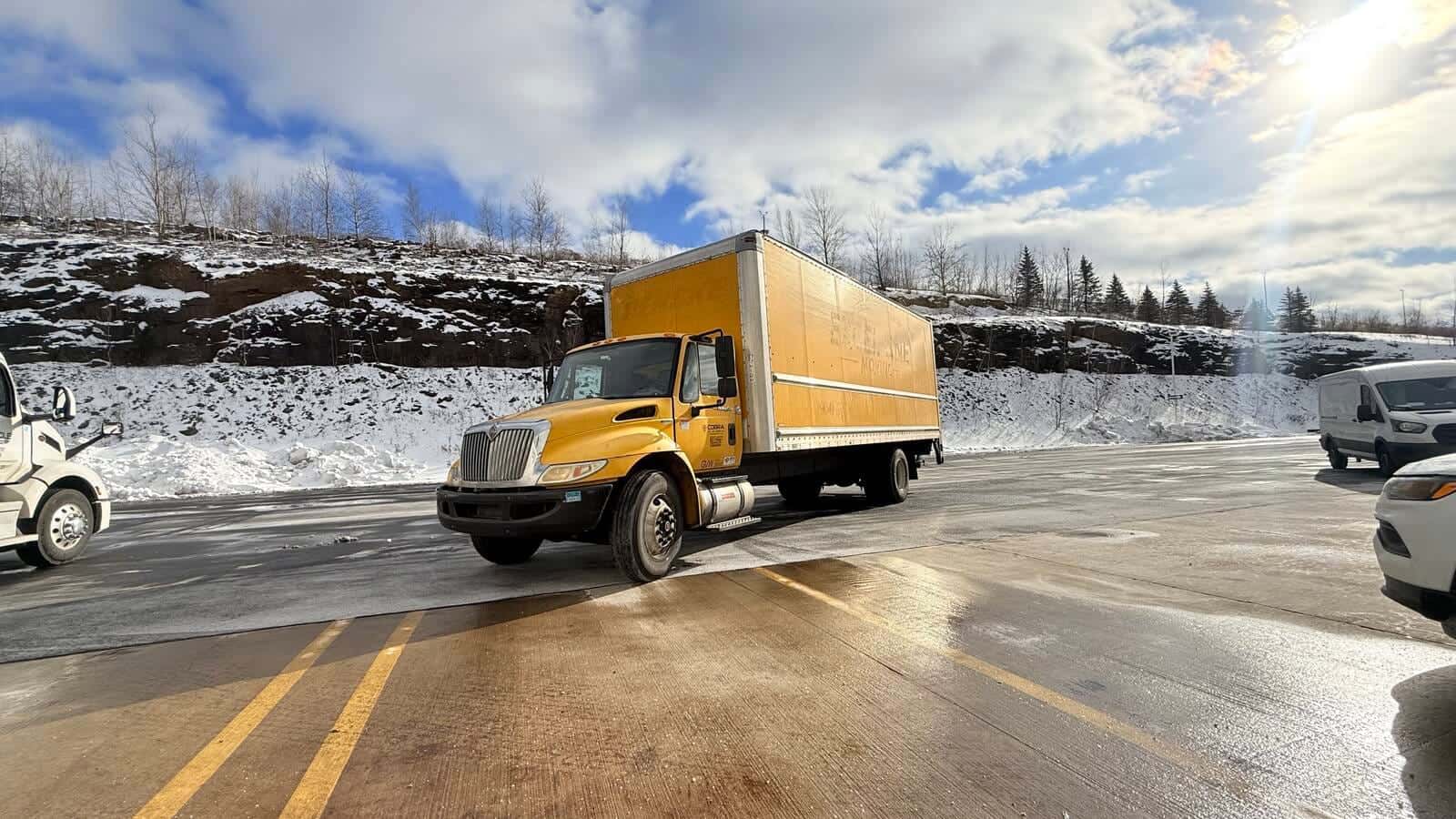
Miami to New York is our anchor lane. Our truck is a 2021 International MV607 with a 26 ft dry box, hydraulic liftgate, e-track and an ELD, and it takes up to 12 standard pallets. It runs with a solo driver under hours-of-service rules, so typical transit is 2–3 days, and we don't sell team-speed promises. Each quote is priced per load from the checklist above, and we send updates at pickup, in transit and at delivery. Lane details, equipment and recurring runs are on our Miami to New York freight page, and you can request a freight quote with your pallet details.
Sources
- U.S. Energy Information Administration — Gasoline and Diesel Fuel Update (opens in a new tab)
- eCFR — 49 CFR 395.3, Maximum driving time for property-carrying vehicles (opens in a new tab)
- eCFR — 49 CFR 390.5, Definitions (commercial motor vehicle) (opens in a new tab)
- Maryland Transportation Authority — John F. Kennedy Memorial Highway (I-95) (opens in a new tab)
- Port Authority of New York and New Jersey — Bridge and Tunnel Tolls (opens in a new tab)
- NYC311 (City of New York) — Congestion Pricing Program (opens in a new tab)