
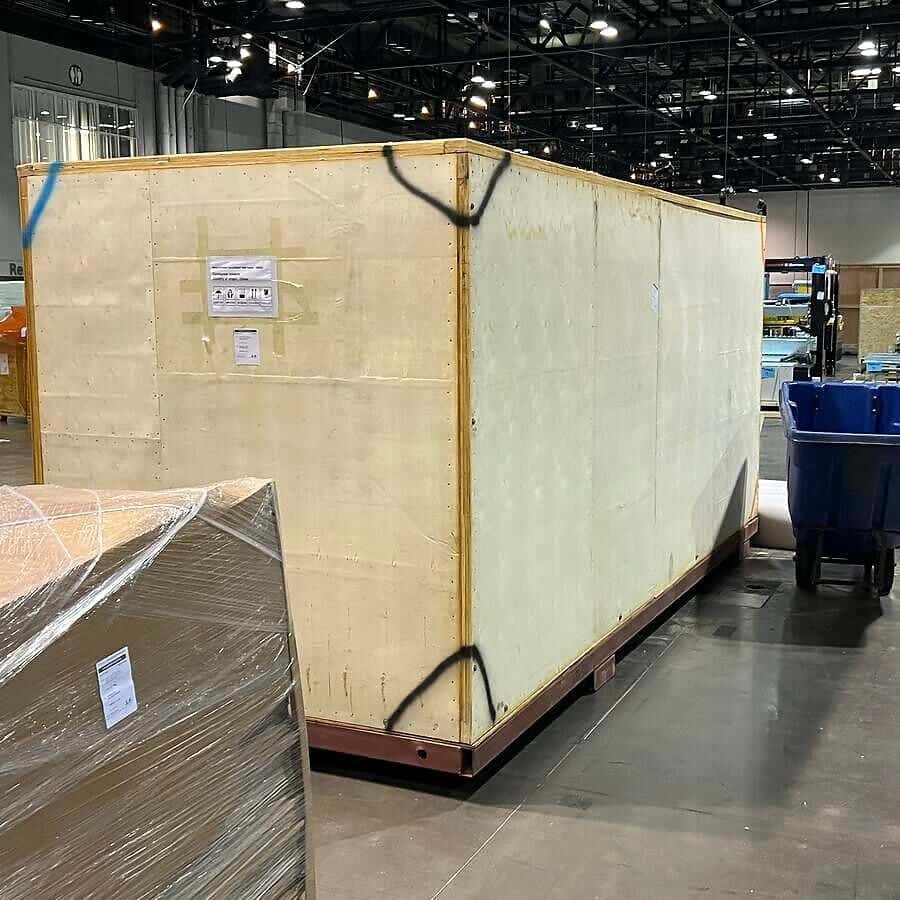
For 4 to 12 pallets, the partial truckload vs LTL choice comes down to handling, density and timing. Standard LTL is usually cheapest for a few dense, well-packed pallets with a flexible delivery date. Partial truckload is usually better for 6 or more bulky pallets because it skips the terminals. A dedicated 26 ft box truck wins when the freight is fragile or the delivery appointment is strict.
This guide is for shippers, receivers and freight brokers holding a mid-size load that is too big for a parcel service and too small for a 53 ft trailer. It covers how each mode is priced, how many times your freight gets touched, and how to pick one for your next shipment.
Key takeaways
- There is no legal pallet cutoff for LTL. Carriers set their own limits, and many re-rate shipments that take up a lot of trailer length.
- Since the NMFC overhaul took effect on July 19, 2025, density drives more LTL classes, so light, bulky pallets can rate higher than you expect.
- Every terminal transfer is another forklift touch and another chance for delay. A dedicated truck is loaded once and unloaded once.
- A 26 ft box truck holds up to 12 standard pallets, about 4 ft of floor per row of two, and its price does not depend on freight class.
- LTL is still the better buy for 1 to 3 dense pallets going dock to dock with no deadline.
What is the difference between partial truckload and LTL?
LTL (less than truckload) is a network product. A pickup truck collects your pallets, takes them to the carrier's local terminal, and they ride a linehaul trailer to a destination terminal. Sometimes they pass through a hub on the way. A local delivery truck then brings them to the receiver. You pay for your share, priced by freight class, weight and lane.
Partial truckload (PTL) is a truckload product. Your freight shares a trailer with one or a few other shipments, but it stays on that trailer from pickup to delivery. No terminal, no cross-dock. Pricing is based mostly on the linear feet you take, the weight, and the lane.
Volume LTL sits in between, and the terms get mixed up. It is a quote an LTL carrier gives for a larger shipment, priced on space and weight instead of the normal class tariff. The price looks like partial truckload, but the freight may still move through terminals. Ask which one you are buying.
A dedicated box truck is the third option most comparisons leave out. You book the whole truck, usually a 26 ft straight truck, for your freight only. It is a full truckload (FTL) on a smaller truck, sized for 4 to 12 pallets instead of the 26 that fit on a 53 ft trailer floor.
How many pallets is too many for LTL?
No regulation sets the limit. Each LTL carrier publishes its own rules tariff, and brokers quote different rules of thumb. You will see standard LTL described as "1 to 6" or "1 to 12" pallets, and partial truckload as "6 to 18" or "8 to 18" pallets, often starting around 5,000 lb. Those are sales guidelines, not rules.
What matters more is trailer length. Many LTL carriers have a linear foot or cubic capacity rule. Once a shipment takes more than a set amount of trailer floor, they rate it on the space it uses instead of the class tariff. That is why a 7-pallet LTL quote can jump compared with a 5-pallet quote for the same freight. Ask the carrier where its cutoff is before you tender.
Floor space is easy to estimate. A standard 48 x 40 in pallet loaded two across with the 48 in side running front to back uses about 4 ft of trailer length per row:
| Pallets (48 x 40 in, single layer) | Rows of two | Floor length used |
|---|---|---|
| 4 | 2 | about 8 ft |
| 6 | 3 | about 12 ft |
| 8 | 4 | about 16 ft |
| 10 | 5 | about 20 ft |
| 12 | 6 | about 24 ft |
So shipping 10 pallets takes about 20 ft of floor, and 12 pallets take about 24 ft. If your freight can't be stacked, each pallet uses its full footprint no matter how short it is. Mark pallets "do not stack" only when it's true, because carriers price that space. For full truck dimensions and payload, see our guide to 26 ft box truck capacity.
How does LTL pricing work after the 2025 NMFC density changes?
LTL carriers rate most freight using the National Motor Freight Classification (NMFC). NMFTA, which publishes it, explains that the NMFC assigns classes based on density, stowability, handling and liability (opens in a new tab). A higher class means a higher rate per hundredweight.
The big change came with Docket 2025-1. NMFTA says the NMFC changes that took effect July 19, 2025 (opens in a new tab) affect how freight is classified, rated and billed. Many commodities that used to have a fixed class now rate by density, so accurate measurements matter more than ever. NMFTA called July 2025 Phase 1 of a larger overhaul, and more dockets have followed: Docket 2026-1 took effect May 23, 2026. Check the class on every quote, even for freight you ship often.
What that means on the dock:
- Density is weight divided by cubic feet. Multiply length x width x height in inches, divide by 1,728, then divide the weight by that number. Measure at the outermost points, pallet included.
- A worked example. A 48 x 40 x 50 in pallet takes about 55.6 cubic feet. At 500 lb, that is about 9 lb per cubic foot. The same pallet at 1,500 lb is about 27 lb per cubic foot and lands in a much lower, cheaper class.
- Tall, light pallets cost more. Overhang, loose wrap and air on top all add cubic feet, which lowers density and raises the class.
- Wrong numbers get re-rated. If the carrier measures something different from your paperwork, expect a reclass and a corrected bill.
Under federal rules, the carrier's bill of lading must list the number of packages, a description, and the weight, volume or measurement when it affects the rate (49 CFR 373.101) (opens in a new tab). Accurate pallet counts and dimensions protect you in any mode.
Here is the point most guides miss: the NMFC change affects LTL pricing, not a dedicated truck. A box truck booked for your freight is priced per move. Miles, stops, lane, date and accessorials set the price, not class. If the 2025 changes pushed your light, bulky product into a higher class, a dedicated truck or a linear-foot partial quote may now compare better than it did before. For many shippers, that alone changes the partial truckload vs LTL math.
How many times does your freight get handled?
Damage and delay usually happen at handoffs, not on the highway. Each time a forklift picks up a pallet, it can puncture a carton, crush a corner or tear the wrap. Each terminal is also a place where freight waits for the next trailer.
| Handling event | Standard LTL | Volume LTL | Partial truckload | Dedicated box truck |
|---|---|---|---|---|
| Loaded at your dock | Yes | Yes | Yes | Yes |
| Cross-docked at origin terminal | Yes | Often | No | No |
| Transferred at a hub | Sometimes | Sometimes | No | No |
| Cross-docked at destination terminal | Yes | Often | No | No |
| Other shippers' stops on the way | Yes | Yes | Yes, a few | No |
| Unloaded at the receiver | Yes | Yes | Yes | Yes |
A standard LTL move usually adds two terminal transfers, each with its own forklift touches, and your pallets sit next to freight you know nothing about. Partial truckload removes the terminals but not the other stops, so your delivery time depends on the stops before yours. A dedicated truck means two touches: on at your dock, off at the receiver.
The New York handoff
Freight bound for New York City adds its own step. LTL shipments for the city often move through a New Jersey terminal and then go out on a local route truck, so the delivery day follows the terminal's route plan, not your receiver's preferred window. NYC DOT calls the city's truck route network one of the most complex in the nation (opens in a new tab), and many receivers have tight docks or no dock at all. Our guide to NYC truck delivery rules covers routes, tolls and off-hours delivery.
When does a dedicated box truck beat both?
Most partial truckload vs LTL comparisons stop at two modes. A 26 ft box truck is a good fit for this pallet range. It holds up to 12 standard pallets, it fits on streets and at docks where a 53 ft trailer struggles, and with a liftgate it can deliver where there is no dock. It is usually the better buy when:
- The freight is fragile, high value or not crated. Fewer touches means fewer chances for damage.
- The receiver gives a strict appointment. Retail distribution centers, job sites and event venues often turn away late freight. A dedicated truck runs to your appointment, not to a terminal schedule.
- There is no dock at delivery. A liftgate truck lowers pallets to street level. In LTL, liftgate, limited access and inside delivery are usually extra charges. See freight accessorial charges explained.
- The freight is light and bulky. If density pushes your LTL class high, a flat per-move price may compare better.
- You want one point of contact. One truck and one driver from pickup to POD means no terminal to call when something changes.
LTL is the better buy when you have 1 to 3 pallets, the freight is dense and well packed, both ends have docks, and the delivery date can move a day or two. The network spreads the cost of the trip across many shippers, and you won't beat that with a dedicated truck for a small, heavy load. The same holds for regular small shipments covered by a negotiated LTL tariff.
Partial truckload vs LTL vs box truck: comparison table
| Factor | Standard LTL | Volume LTL / partial truckload | Dedicated 26 ft box truck |
|---|---|---|---|
| Best pallet range | 1 to about 6 | About 6 and up, varies by carrier | 4 to 12 |
| How it is priced | Class, weight, lane, discounts, fuel, accessorials | Linear feet, weight, lane | Per move: miles, stops, date, accessorials |
| Does NMFC class matter? | Yes | Rarely for PTL, sometimes for volume LTL | No |
| Terminal transfers | Yes | Volume LTL may; PTL no | No |
| Other stops on your truck | Many | A few | None |
| Appointment control | Low | Medium | High |
| No-dock delivery | Liftgate at extra charge | Depends on equipment | Liftgate truck if booked |
| Transit predictability | Lowest | Middle | Highest, still never guaranteed |
How Cobra US Cargo handles 4 to 12 pallet loads
Cobra US Cargo runs a 2021 International MV607 with a 26 ft dry box, hydraulic liftgate and e-track load securing. It holds up to 12 standard pallets. When you book our truck, your freight is loaded once at your dock and unloaded once at the receiver. Shippers get updates at pickup, in transit and at delivery. Our anchor lane is Miami to New York freight, about 1,280 miles on I-95 with a typical transit of 2 to 3 days, and we run nationwide across the 48 contiguous states. Our partial truckload and LTL box truck service covers mid-size dry freight, and you can request a freight quote with your pallet count, dimensions, weight and the receiver's appointment window.
How to decide for your next 4 to 12 pallet shipment
The partial truckload vs LTL decision gets easier once you have real numbers. Run through this checklist before you request quotes:
- Measure and weigh every pallet. Length, width and height at the widest points, plus the real weight. This decides your LTL class and your floor space in any truck.
- Count the floor. Pallets divided by two, times about 4 ft, gives the linear feet. Over about 12 ft, ask for a volume LTL or partial quote as well as standard LTL.
- Rate the fragility. Uncrated, top-heavy or high-value freight leans toward a direct truck.
- Check the delivery end. Dock or no dock, appointment or open receiving, city or suburb. A strict window or a no-dock site leans toward a dedicated truck with a liftgate.
- Price the extras. Add liftgate, limited access, appointment and inside delivery charges to every LTL quote before comparing.
- Compare all three on the same day with the same numbers. Then pick the lowest total cost that still meets the appointment.
Sources
- NMFTA — 2025 NMFC Changes: Shippers (opens in a new tab)
- NMFTA — Navigating Updates to the National Motor Freight Classification (NMFC) (opens in a new tab)
- eCFR — 49 CFR 373.101, For-hire, non-exempt motor carrier bills of lading (opens in a new tab)
- NYC DOT — Trucks and Commercial Vehicles (opens in a new tab)