
Yes, you can lease on with your own authority and still keep your MC number. Under FMCSA's Motus registration system, a carrier can voluntarily suspend its operating authority to lease onto another carrier, then reinstate it within one year. The order matters: change your authority status before your insurance filing, or a cancellation notice can end in an involuntary revocation.
This guide is for box truck owner-operators who paid for their own authority, waited out the activation, and now can't keep the truck loaded. It covers your options, what happens to each filing, the safe order of steps and how to come back to your own MC later.
Key takeaways
- Having your own MC doesn't stop you from leasing on. During the lease, the truck runs only under the carrier's authority, insurance filing and USDOT number.
- Motus gives you a middle path: voluntarily suspend the authority to lease on, and reinstate it within one year instead of starting a new application.
- Never let the insurance filing lapse first. A cancellation takes effect 30 days after FMCSA receives the notice, and authority without insurance on file is revoked or suspended involuntarily.
- The things the suspension doesn't pause are still yours: the biennial USDOT update, your truck's own insurance and the paper trail you will need to come back.
Can you lease on with your own authority?
Yes. Holding authority and leasing on are not mutually exclusive. What you can't do is run the same truck under both at once. Under 49 CFR 376.12 (opens in a new tab), the lease must give the carrier exclusive possession, control and use of the truck for the length of the lease, and the carrier takes full responsibility for operating it. So while the lease runs, every load in that truck moves on the carrier's authority, its insurance filing and its USDOT number.
That leaves one real decision: what to do with your own authority in the meantime. You have four choices, and only two of them protect what you paid for. New to lease paperwork? Start with our guide to the box truck lease on and its 376.12 checklist.
Your authority while you're leased on: the four options
Each option trades cost, effort and the speed of your return.
| Option | What happens to your MC | Filings you keep paying for | Coming back | Best when |
|---|---|---|---|---|
| Keep it active | Stays active | Your liability insurance filing and BOC-3 stay on file | Nothing to restart | You run a second truck under your own MC, or the lease is very short |
| Voluntary suspension (Motus) | Suspended on your request | Ask FMCSA before the liability filing comes off. Keep your USDOT number active | Reinstate in Motus within one year, with insurance and BOC-3 back on file | You plan to come back within a year |
| Voluntary revocation | Ends on your request | None | A separate reinstatement request, or a new application. Ask FMCSA what applies | You are done with your own authority for good |
| Let the insurance lapse | Revoked or suspended involuntarily | None, by default | A reinstatement request, with the involuntary action in your authority history | Never on purpose |
The Federal Register notice announcing Motus (opens in a new tab), published April 29, 2026, lists both voluntary suspension and voluntary revocation as requests carriers can make in the new system. It also says what happens when a carrier fails to keep insurance on file: the authority "will be revoked or suspended involuntarily." And it notes that a registrant can suspend or revoke part of its authority, not all of it, which matters if you also hold broker authority you want to keep. Keeping the carrier authority active costs real money, because the liability filing has to stay in place for a truck that isn't hauling under it.
What is voluntary suspension of operating authority in Motus?
Voluntary suspension is a request you make in Motus, FMCSA's new registration system, to put your operating authority on hold. FMCSA's registration changes page (opens in a new tab) names the main uses: seasonal carriers, and carriers that want to lease onto another carrier for a while. You can reinstate the suspended authority in Motus up to one year after the suspension date.
The Federal Register notice lists a related request too: you can suspend or revoke the authority and amend your USDOT number's operation classification, so the USDOT number stays active even though the authority is on hold. That matters if you want to keep your company's registration alive while you drive under someone else's MC.
Two facts are worth knowing before you file:
- MC numbers still exist. The same April 2026 notice says the Motus Phase II release does not eliminate MC numbers or change the BOC-3 filing process. FMCSA says those changes are still under consideration and would go through a proposed rule first.
- The system is new. Motus replaces the older registration and licensing systems in phases. After every change you request, check that your status shows what you asked for before you take the next step.
What happens to your insurance filing, BOC-3, USDOT number and UCR?
Suspension doesn't end every obligation. Here is what changes.
Insurance filing and BOC-3
While the authority is active, your insurer keeps a liability filing on it with FMCSA. Once the suspension shows on your record, there is no active authority for that filing to support. When you reinstate, the liability filing at the federal minimum in 49 CFR 387.9 and your process-agent designation (BOC-3) have to be on file again before the authority goes active. Whether the filing can come off while you are suspended is a question to confirm with FMCSA and your agent before anything is cancelled.
Your truck's own insurance
The FMCSA filing is only one piece. A leased-on truck still needs whatever coverage the lease assigns to the owner. Section (j) of 376.12 requires the lease to state the carrier's duty to carry public liability coverage, to say who provides any other coverage, such as bobtail insurance, and to state the amount of any insurance the carrier charges back to you. For a straight truck, the off-dispatch coverage is usually sold as non-trucking liability. Talk to a licensed commercial insurance agent about rewriting your policy for a leased-on truck before anything is cancelled.
USDOT number and biennial update
If you keep the USDOT number active, the biennial MCS-150 update is still due every 24 months, on the schedule set by the last two digits of the number. A missed update can get the USDOT number deactivated, and FMCSA won't accept a reinstatement request while the USDOT number is inactive or out of service.
UCR
Unified Carrier Registration is an annual registration based on the vehicles a carrier operates. While your truck runs under the lease, it operates under the carrier's USDOT number. Whether your company still has to register depends on how your record is classified while you are leased on, so use the "Not sure if you need to register?" check on ucr.gov before you pay or skip it.
Does leasing on affect your safety record or new entrant audit?
While your truck is leased on and marked with the carrier's name and USDOT number, roadside inspections and crashes are recorded against the carrier operating it, not your company. Your company's own record simply stops adding new events while it isn't operating. As the driver, your personal inspection and crash history still follows you through FMCSA's Pre-Employment Screening Program, which carriers can check, with your consent, when you apply.
If your authority is young, look at the new entrant clock first. Under 49 CFR 385.307, a new carrier is monitored for 18 months, and FMCSA runs the new entrant safety audit once the carrier has enough operating records to review, generally after at least 3 months. If you are still inside that window, ask FMCSA how a suspension affects your pending audit before you file, and keep your records from the months you did operate.
In what order should you switch from your own MC to a lease-on?
This is where owner-operators lose their authority by accident. An insurance cancellation can't take effect until 30 days after FMCSA receives the notice of cancellation, per 49 CFR 387.313T (opens in a new tab). If your agent cancels first and nobody touches the authority, the clock runs out, there is no insurance on file, and the authority is revoked or suspended involuntarily. Work in this order instead, and confirm each FMCSA step on the agency's site or with FMCSA directly, because Motus is still new:
- Pick the carrier and get the full written lease. Read pay, chargebacks, escrow, insurance and termination before you change anything at FMCSA, and have a transportation attorney look at anything unclear. Then check the carrier itself: active authority, insurance on file.
- Confirm your start date. Your own insurance filing should cover you until the day the lease begins, and not much longer.
- Request the voluntary suspension in Motus. If you want the USDOT number to stay active, make the classification change in the same request.
- Check that the status shows as suspended. Save a screenshot or PDF with the date. That is your proof that the change was voluntary.
- Tell your agent to rewrite the policy. Only now, once FMCSA has confirmed that removing the filing won't change your status, should the filing come off and the policy change to the coverage your lease puts on the owner. Get the new coverage in writing before the old one ends.
- Change the door markings. Under 49 CFR 390.21T (opens in a new tab), the truck must show the operating carrier's name and USDOT number on both sides. If your company name stays on the truck, the carrier's name has to be preceded by the words "operated by."
- Start the lease. Keep the receipt for the truck, the lease copy in the cab and your own signed copy.
- Set two reminders. One for your next MCS-150 update, and one at about nine months after the suspension date to decide whether you are coming back.
How do you go back to running under your own authority?
Coming back is the same list in reverse, and the one-year window is the deadline that matters.
- End the lease properly. Follow its termination clause and take off or cover the carrier's markings. Under 376.12, any escrow must come back no later than 45 days after termination.
- Line up insurance first. FMCSA's reinstatement FAQ (opens in a new tab) requires the minimum financial responsibility filing and your BOC-3 on file, plus an active USDOT number with current information.
- Request reinstatement in Motus before one year has passed since the suspension date. FMCSA lists the reinstatement fee as $80.
- Confirm the status shows active before you book your first load under your own MC.
- Put your own markings back on the doors, with your name and USDOT number.
- Rebuild your broker setups. Many brokers will re-vet you. Have your authority status, certificate of insurance and W-9 ready.
If you miss the one-year window, don't count on a simple reinstatement. Ask FMCSA what applies to your record, because you may have to apply again.
Stay independent or lease on for now?
Neither path is better for everyone. The honest test is whether your problem is freight, cash flow or the paperwork load. Here is how the choice usually breaks down:
- Lease on for now if your truck sits more days than it runs, brokers turn you down for new authority, or the cost of keeping your own filings and compliance running outweighs what the truck brings in.
- Stay independent if you have direct shippers or brokers who already book you, you run more than one truck, or you are close to the end of your new entrant period and want the audit behind you.
- Fix the load problem first if you are not sure. Our guide on how to find box truck loads covers the broker setup gaps that keep new carriers empty.
Whatever you choose, decide it on paper: what you keep after every chargeback in the lease, against what it costs to keep your own authority alive. Have an accountant look at both columns before you sign.
How Cobra US Cargo handles this
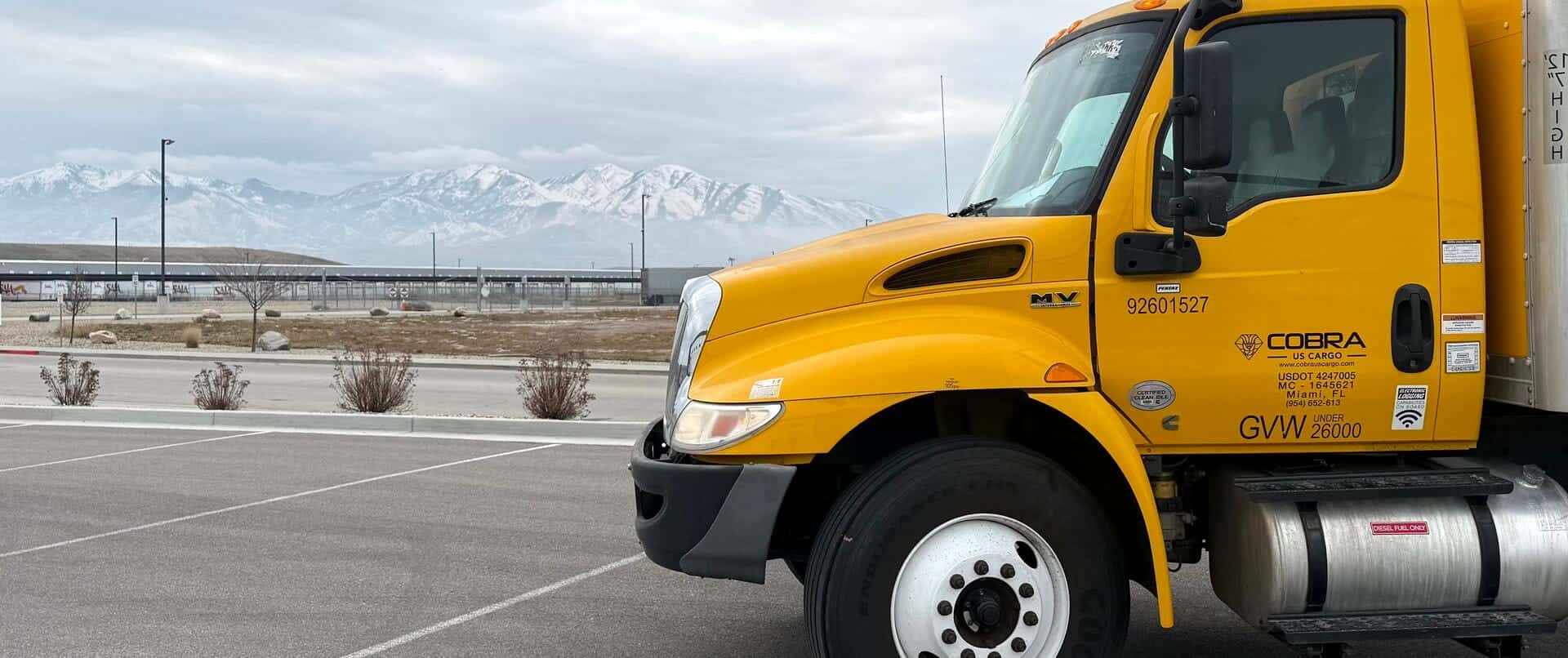
Cobra US Cargo LLC is a Miami-based interstate carrier (MC-1645621, USDOT 4247005), fully insured to industry standard. We run our fleet of 26 ft box trucks plus a growing owner-operator program across the 48 states, and we want to be the first carrier partner for owners who have the truck but not the freight. If you hold your own MC and are weighing a lease on, talk to us about your situation. For how it would work with your authority, our pay structure and the rest of the terms, contact us for details.
Owner-operators lease on to our MC, and our dispatch, in English and Spanish, finds and books the loads. We help you get the right insurance in place, support ELD and compliance, offer a fuel card and fuel discounts, give startup guidance and pay weekly. The only truck requirement is a 26 ft box truck, 2018 or newer, and owner-operators anywhere in the US are welcome. Fleet owners can put a hired driver in the truck, as long as that driver meets our driver requirements. The figure we share is $6K–$10K a week in gross. Gross revenue before fuel, insurance and other expenses. Results vary by truck, availability and lanes. Have your own MC? Talk to us about your situation.
Sources
- FMCSA — About FMCSA Registration Changes (Motus) (opens in a new tab)
- Federal Register — Availability of Motus, FMCSA's New Registration System (Apr 29, 2026) (opens in a new tab)
- eCFR — 49 CFR 387.313T, Forms and procedures (cancellation notice) (opens in a new tab)
- eCFR — 49 CFR 376.12, Lease requirements (opens in a new tab)
- eCFR — 49 CFR 390.21T, Marking of self-propelled CMVs (opens in a new tab)
- FMCSA — How do I reinstate my Operating Authority (MC/FF/MX number)? (opens in a new tab)